
Applications that think and act alongside you, without custom development
AI is embedded directly into application logic, the data layer, and the interface. The result: faster request handling, fewer errors, and stronger oversight of performance and compliance.

Leaders in automotive, banking, and telecommunications rely on our solutions









One platform, two perspectives
Applications that think alongside you
Instead of another spreadsheet or isolated form, you get applications that think alongside you, without custom development and within the user's existing environment.
- When an incident is logged, fields such as asset and severity are populated automatically
- A likely root cause and a recommended resolver group are proposed
- For changes, it prepares pre- and post-checklists and proposes approvers
- For an audit, it flags missing evidence and generates the audit narrative
Declarative applications with an AI layer
Applications are defined declaratively, with a unified data model for both the applications and stored data.
- The built-in AI layer understands application logic, data, and user context and can actively work with them
- It understands the relevant context and the implications of the situation
- It interprets the current state, anticipates what is needed, and actively assists users as they work
- Robust, auditable operations built to scale
What Smart Digitalization solves
With every team, we start with a real problem and embed the solution directly into the process.
Operations and quality
Heavy manual administration in CAPA processes, duplicate records, and weak auditability. The system prefills severity, category, and asset, proposes a workaround and a likely root cause, recommends a resolver group, and triggers immediate actions.
Service and back office
Inconsistent forms, inconsistent rules, and slow approvals. For a change request, the system proposes approvers, prepares pre- and post-change checklists, and monitors the SLA.
Compliance and audit
Missing evidence and cumbersome reports. The system recommends the controls required by the relevant standard, flags missing records, and generates an audit narrative backed by a traceable history.
HR and workforce
Staffing roles based on skills, tracking certifications, and planning development. The system recommends people for a shift or project, flags expired certifications, and recommends training.
Key benefits
Fewer errors and duplicates
Automatic field population and input validation reduce the risk of errors at the moment a record is created.
Faster processing
The system proposes next steps, assignees, and approvers as work progresses, without waiting for manual input.
Stronger compliance oversight
Rules and policies are checked automatically within the process, and decisions remain explainable and auditable.
Less wasted effort
Procedures are version-controlled, include citations, and help prevent work from being sent back for correction.
Consistent records
Relevant data is extracted directly from emails and files and assigned to records systematically.
Early warnings
Performance indicators and variances are monitored in real time, enabling early intervention.
Traditional digitalization vs. Smart Digitalization
- Manual forms lead to errors in the data
- Requests sent by email get lost and are hard to track
- Approvals take too long
- Procedures differ from team to team
- The status of a request is unclear
- Audits lack the context behind decisions
- New employees take a long time to get up to speed
- Key fields are validated and filled in automatically
- Requests are captured in chat and stored as managed records
- The system proposes approvers and checks for conflicts
- AI provides step-by-step guidance and recommendations as the work is performed
- The user sees the current status and the next step directly in chat
- Actions, the reasons behind decisions, and source citations are all recorded
- Role-based guidance while the work is being done
From prototype to production
A working prototype
A smart application prototype demonstrates data processing, information retrieval, and recommendations in a configurable environment.
Complete workflows
Managed forms, controls, and an audit trail. Governance and security (RBAC/RLS) are fully in place.
A production platform
High availability and monitoring, with stable operations that can be extended with new modules and integrations.
Proven in practice

Social Insurance Agency: digitalization and automation of business processes
A BPMN 2.0 process platform unified business process modeling, automation, monitoring, and measurement across the Social Insurance Agency.
View case study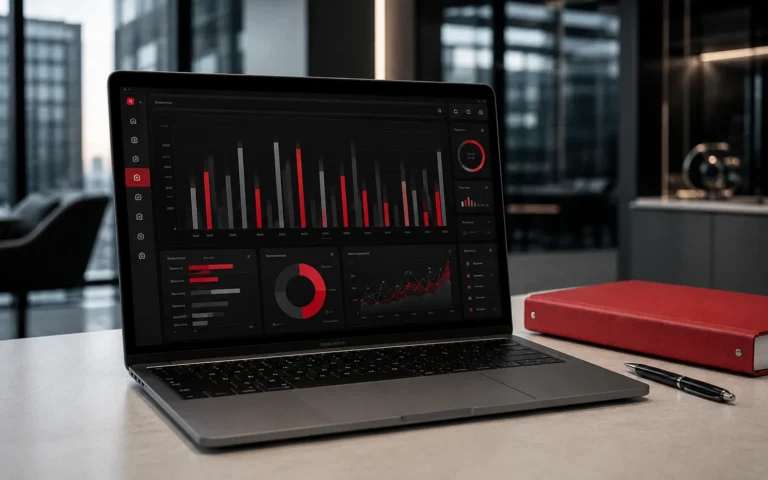
Active Equal Pay Management
This case study presents the implementation of Active Equal Pay Management, a solution designed to address the challenges of fair and transparent…
View case study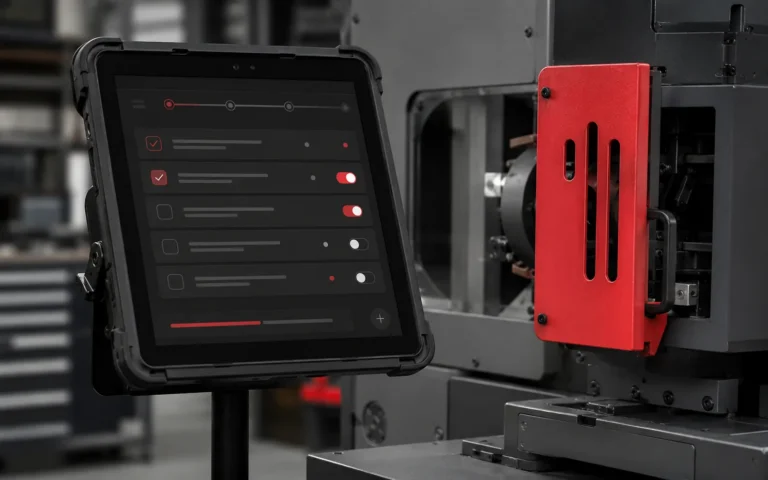
Digitizing process audits for industrial manufacturing
100 % digitization
of daily checks and process auditsQuestions we hear most often
How does Smart Digitalization work in practice?
Enterprise applications are built through configuration. The AI knows both the data and the logic and helps the user during the work: it prefills, explains, and recommends the next step.
Is any coding needed?
No. Applications are assembled from configuration elements (forms, workflows, rules) that AI can interpret in real time.
Can we start with a small project?
Yes. We launch a PoC within two to four weeks and extend it to an MVP within six weeks.
How is data security handled?
RBAC/RLS, encryption, EU data residency, and an audit trail.
Can the platform be adapted to our environment?
Yes. The platform supports multi-cloud deployment, including deployment in your own tenant with your own policies.
What if our processes or rules change?
Changes are made through configuration. The AI adapts to the changed logic without requiring code to be rewritten.
Try Smart Digitalization in your own environment
In a short call, we'll show you where Smart Digitalization can deliver the most value. No obligation.