


Na jednej strane je to spôsobené jeho nespornými výhodami, vznikom nových služieb a technológií, ktoré jeho používanie posúvajú na novú úroveň, na strane druhej aj celospoločenskou situáciou a tendenciami, ktoré vplyvom pandémie akcelerovali jeho využívanie.
Ak aj vy uvažujete nad prechodom do cloudu, dokonca ste už tento krok podnikli, je nutné, aby ste si uvedomili jedno: cloud je len prostriedkom, nie cieľom. Presne týmto výrokom začína populárny článok od spoločnosti McKinsey pojednávajúci o tom, čo v skutočnosti znamená cloudová transformácia.
Ako sa totiž v praxi čoraz častejšie ukazuje, prejsť z fyzického servera do cloudu neznamená automaticky jeho úspešné prijatie či dokonca transformáciu na cloudový podnik. V skutočnosti je to len jeden, aj keď významný, prvok na ceste k modernizácii IT v organizácii.
„Len“ migrácia do cloudu nestačí
Mnohé spoločnosti si myslia, že migrácia do cloudu bude automaticky znamenať modernizáciu IT či dokonca ich úspešnú digitálnu transformáciu. Tento prístup však nemôže byť ďalej od pravdy. Veľmi dôležité je totiž rozlišovať medzi cloudovou migráciou, ktorá len zabezpečí presun vašich aplikácií a iných pracovných nástrojov bežiacich na lokálnej infraštruktúre do cloudovej infraštruktúry (napríklad migrácia 100 lokálnych fyzických serverov na AWS službu bez architektonických zmien aplikácií).
Modernizácia pomocou cloudu nastáva až vtedy, keď sa dostanú do centra pozornosti procesu migrácie práve aplikácie. Analyzujú sa individuálne, mapujú sa na ekvivalentnú cloudovú natívnu službu a prestavujú sa tak, aby natívne fungovali v cloudových spravovaných službách (napríklad architektúra mikroslužieb). Tieto prístupy však vo veľa aspektoch zaostávajú za využitím plného potenciálu, ktorý cloud computing ponúka.
Skutočné prijatie cloudu v organizácii tak, aby viedlo k modernizácii IT a digitálnej transformácii, sa totiž viaže na možnosti organizácie úspešne implementovať schopnosti cloud computingu do celej organizačnej štruktúry. Nielen do technologickej infraštruktúry, ale aj do kultúry, obchodných procesov, produktov a služieb.
Cloudová transformácia nie je len transformáciou technológie, ale transformáciou podnikania ako takého. Vaši ľudia, kultúra a procesy zohrávajú rozhodujúcu úlohu pri dosahovaní čo najväčšieho vplyvu na váš podnik.
V tomto kontexte je najdôležitejšie uvedomiť si, čo od cloudu vo vašej spoločnosti očakávate. Vnímate ho len ako prírastkový nástroj na zlepšenie flexibility a schopnosti reagovať na podnikanie? Alebo v cloud computingu vidíte potenciál a základ celopodnikovej transformácie, ktorá podporuje digitálnu transformáciu, agilný vývoj, vývoj nových produktov, spoluprácu v oblasti výskumu a vývoja a ďalšie?
Nižšie uvedená ilustrácia od CloudSpectacor veľmi dobre kontrastuje tieto dva prístupy – transformačný (aplikovaný na celé podnikanie) a inkrementálny (úzko aplikovaný v rámci IT).
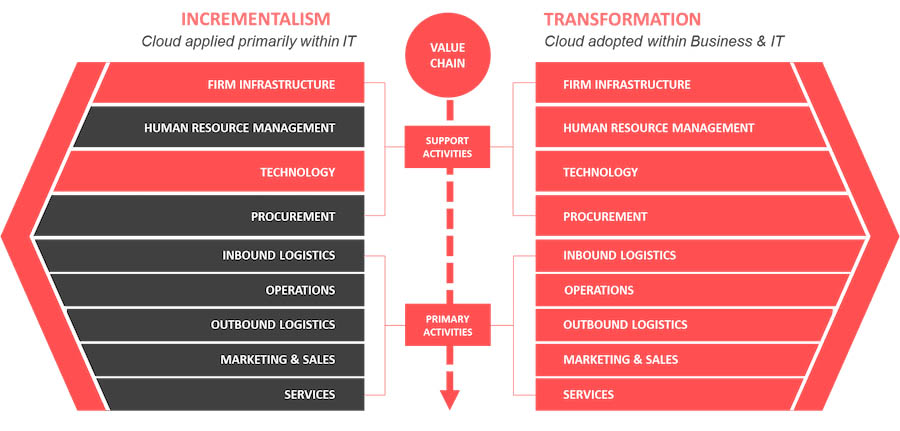
ZDROJ: www.cloudspectacor.com
Aj z tejto ilustrácie je zrejmé, že skutočná a úplná hodnota cloudu sa ukáže vtedy, keď sa k možnostiam, ktoré ponúka, nepristupuje len jednorazovo, ale zvolí sa holistický prístup zameraný na modernizáciu IT a digitálnu transformáciu. A hoci cloud nie je nevyhnutným predpokladom mnohých aspektov modernizácie IT, funguje ako multiplikátor sily. Spoločnosti, ktoré vnímajú možnosti cloudu týmto spôsobom, môžu vytvoriť IT novej generácie, ktoré umožní rast a inovácie v rýchlo sa rozvíjajúcej digitálnej ére.
Ako pristupovať ku cloudovej transformácii vo vašej firme?
Z uvedeného je zrejmé, že cloudová transformácia môže mať významný prínos pre budúcnosť podnikania, jeho konkurencieschopnosť a schopnosť reagovať na technologické zmeny i zmeny na trhu. Vyžaduje si však aj značné počiatočné investície a čas. Je preto dôležité pristupovať ku cloudovej transformácii strategicky a zvážiť mnohé hľadiská. Spoločnosť McKinsey uvádza 4 hlavné aspekty, ktoré by ste mali v tomto smere zvážiť:
Zdroje a rozpočet
Vytvoriť vlastné portfólio cloudových služieb a jeho udržiavanie, pokiaľ nie ste veľká nadnárodná spoločnosť, môže byť rozpočtovo neudržateľné. Aj preto v praxi využívame vo väčšine prípadov verejných poskytovateľov cloudových riešení, napríklad Microsoft Azure alebo AWS. Tieto spoločnosti poskytujú spoľahlivé škálovateľné služby s vysokou mierou zabezpečenia a stability, pričom majú na trhu pevné postavenie.
Ich využitie vie významne šetriť zdroje i rozpočet z krátkodobého i dlhodobého hľadiska. Neustále prichádzajú s vylepšeniami či novými službami, akými sú napríklad serverless služby.
Model prevádzky cloudu
Na rozdiel od tradičných operačných modelov verejný cloud vyžaduje, aby IT spravovalo infraštruktúru ako kód (IaC). Vyžaduje si to softvérových inžinierov, ktorí rozumejú výpočtovým a bezpečnostným protokolom verejného cloudu (na rozdiel od sieťových inžinierov alebo systémových administrátorov). Pre väčšinu podnikov to znamená masívne zvyšovanie kvalifikácie organizácie infraštruktúry a prevádzkového modelu, v ktorom pracujú.
Aktualizácia infraštruktúry
Aplikácie, ktoré aktuálne v spoločnosti používate, by mali byť aktualizované na úrovni infraštruktúry a architektúry. Na jednej strane tak dokážu využiť plný potenciál cloudového prostredia, na strane druhej budú spĺňať aj požiadavky na bezpečnosť a kapacitu cloudu. Dôležité je preto vytvoriť jasnú stratégiu modernizácie starších aplikácií, zosúladením plánu migrácie s hlavnými aktualizáciami alebo výmenami aplikácií a prijatím základných riešení (ako sú rámce API), aby bola náprava jednoduchšia.
Kultivácia zručností
Vaši IT experti v rámci vývojových tímov musia byť schopní vyvíjať aplikácie v cloude (konkrétne v systéme dodávateľa) bezpečne a rýchlo. Na to budú musieť spoločnosti najať alebo vyškoliť odborníkov na cloud.
Ako cloudová transformácia akceleruje vašu IT modernizáciu?
Samotná migrácia aplikácií do cloudu síce zníži vaše náklady, ale nezabezpečí vám skutočnú obchodnú hodnotu. Všetky technologické novinky posúvajúce podnikanie na novú úroveň, ako napríklad umelá inteligencia, automatizácia či digitalizácia, sú mnohokrát pre starú on-premise infraštruktúru nedostupné. Je preto skutočne na zamyslenie, či je vhodné zamerať sa len na jeden aspekt cloudových možností, keď môže podnik získať konkurenčnú výhodu využitím sily všetkých týchto prostriedkov.
Skutočná cloudová transformácia znamená, že cloud nie je len virtuálnym miestom hosťovania vašich aplikácií, ale je kľúčovým faktorom, ktorý ovplyvňuje celý hodnotový reťazec vašej spoločnosti (vrátane obchodnej stratégie či služieb). V tomto zmysle teda presahuje rámec cloudového inkrementalizmu a stavia agilitu, rýchlosť a škálovateľnosť cloud computingu do obchodných a prevádzkových procesov.
Atribúty cloudovej transformačnej organizácie sú nápadne odlišné od atribútov cloudovej inkrementalizovanej organizácie, aj keď, ako je uvedené vyššie, nejde o vzájomne sa vylučujúce prístupy. Oba prístupy majú spoločnú základnú požiadavku: potrebu vedenia cloudu.
Prechod do cloudu by teda nemal byť vaším konečným cieľom, mali by ste ho považovať za nástroj na zvýšenie produktivity vašej firmy a zabezpečenie jej kontinuity. A aj keď aspekty, ktoré je potrebné pri tomto prístupe zvážiť, ako rozpočet, aktualizácia infraštruktúry, zručnosti či model prevádzky, sa môžu zdať v mnohých prípadoch ako neprekonateľné prekážky.
S partnerom, ktorý má s cloudovou transformáciou skúsenosti bude ich prekonanie oveľa jednoduchšie a hodnota čakajúca v cieli oveľa vyššia, než skutočné náklady.
Páčil sa vám článok?
Prihláste sa do newslettera
Zdieľajte ho na sociálnych sieťach