

The client
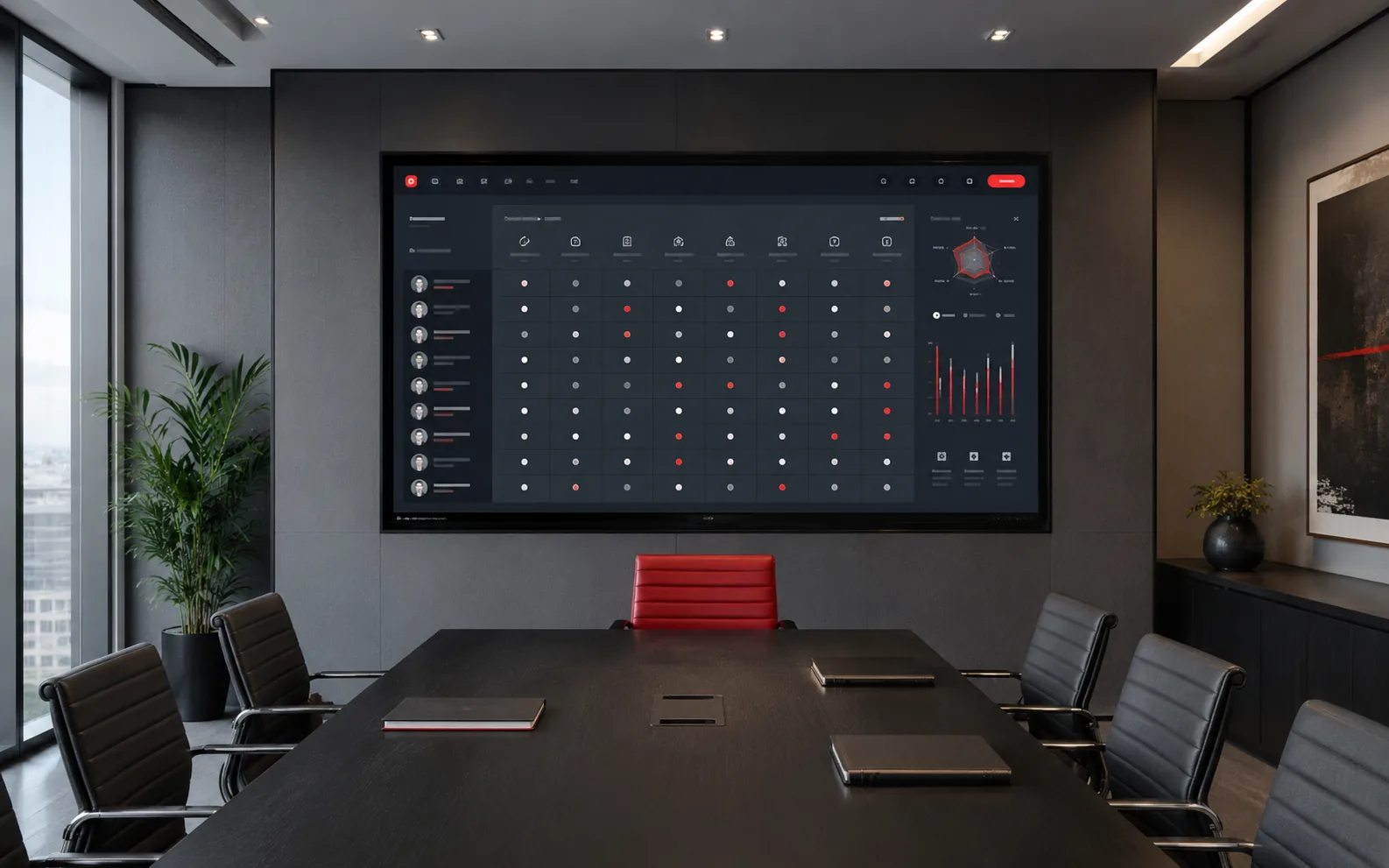
Solvedio is a Digitalization as a Service (DaaS) platform focused on end-to-end business digitalization through a human-centered, no-code approach. Solvedio solutions are designed for manufacturing, HR, and the public sector, with the goal of making digital transformation fast and accessible. Its speed, flexibility, and low costs have made Solvedio an important partner for companies looking to modernize processes and increase productivity.
Context and challenges
The digitalization and HR technology market has changed substantially in recent years. Organizations are increasingly turning to intelligent systems that can automatically evaluate capabilities, optimize teams, and predict learning needs. This trend is driving broader adoption of cloud and AI solutions.
The main business challenge for Solvedio was limited automation in processing and understanding unstructured data used to populate and maintain its skill matrices. Customers needed a solution that could go beyond manual data entry and basic skill tracking. The platform required a significant technology upgrade to:
- Automatically generate comprehensive skill matrices directly from employee documents such as résumés and certificates. The system had to process multiple formats including PDF, DOCX, TXT, and different image types.
- Provide intelligent recommendations for new skills based on the user’s existing profile and documents.
- Automatically recommend qualified users for specific skill groups or projects, making team formation more efficient.
- Enable conversational interaction with the system for finding skills and knowledge through an AI chat model.
Without adding generative AI capabilities, Solvedio faced several longer-term business risks:
- Stagnating product offering: The platform would lack the competitive differentiation provided by AI-based capabilities, creating a risk of losing market share to more innovative solutions.
- Limited customer value: Customers would continue to carry the burden of manual data entry and analysis, reducing the platform’s value proposition and potentially contributing to customer churn.
- Scalability limitations: Without automated skill extraction, customers would struggle to manage skills efficiently across large and dynamic workforces, limiting Solvedio’s appeal at enterprise scale.
- Operational inefficiency for end users: Customers would continue to face inefficient project staffing, slow identification of expertise, and limited strategic visibility into their collective skill base.
The goal
Business goals:
-
Automate the generation and updating of skill matrices directly from employee documents.
-
Optimize team formation using AI recommendations based on skills and availability.
Technical goals:
-
Build an intelligent, API-driven platform with generative AI for processing multiple document formats.
-
Implement a set of secure, asynchronous APIs for long-running tasks.
The solution
The solution uses a serverless architecture, with AWS automatically managing scaling and availability. The architecture is designed to process long-running tasks efficiently and resiliently by separating them from the user’s initial request. This approach ensures that a failure in one process does not cause the entire API request to fail.
Architecture overview
-
SQS decouples data ingestion from processing, allowing the system to handle high peaks in incoming requests.
-
Aurora Serverless (PostgreSQL) and Amazon S3 provide data storage. Aurora also serves as the vector database managed through Bedrock Knowledge Base, with automatic scaling and Multi-AZ deployment.
-
The fully serverless approach removes single points of failure: components such as API Gateway, AWS Lambda, and DynamoDB operate and scale independently.
-
The asynchronous job system ensures that the API remains available and stable even when an individual task fails.
Task processing and orchestration
Each request creates a separate job recorded in DynamoDB. The table stores processing states such as pending, streaming, failed, and completed. Once processing finishes, the result is written back to the record. This allows long-running AI requests to be handled efficiently without overloading the system.
Components and their role
-
Amazon Bedrock Knowledge Base provides a fully managed Retrieval-Augmented Generation (RAG) pipeline that includes vectorization of source documents with Titan Text Embeddings v2, storage in Aurora Serverless, and query management. Building a custom RAG implementation would require more time and technical effort.
-
Aurora Serverless (PostgreSQL) was selected for automatic scaling and lower costs compared with OpenSearch Serverless. It will also support a broader set of capabilities planned for the future.
-
DynamoDB supports asynchronous processing of AI requests because using a relational database for this purpose would introduce unnecessary overhead.
-
SQS supports batch processing of new records that need to be ingested, preprocessed, and vectorized, improving system resilience. Alternatives such as RabbitMQ on EC2 were rejected because of their higher operational overhead.
-
AWS Lambda is the compute layer for all business logic: its event-driven design allows it to respond to both API calls and queue messages.
-
EventBridge periodically triggers AWS Lambda functions to synchronize the knowledge base.
-
CloudWatch monitors system performance, errors, and latency for optimization purposes.
Integrations and data flows
-
SQS → Lambda triggers: for asynchronous batch processing of records.
-
DynamoDB → Lambda triggers: for processing new AI requests.
-
Bedrock Knowledge Base ↔ Aurora Serverless: for storing vectors generated with Titan Text Embeddings v2.
-
EventBridge → Lambda: for scheduled knowledge base synchronization.
This design provides resilient, scalable, and cost-efficient operations without requiring server management, while keeping individual components decoupled and independent.
Each AWS service was selected after evaluating alternatives:
-
Bedrock Knowledge Base: provides a fully managed RAG process; a custom implementation would increase complexity and delivery time.
-
Aurora Serverless (PostgreSQL): selected for automatic scaling and lower costs compared with OpenSearch Serverless, while making use of the team’s existing expertise.
-
DynamoDB: manages long-running AI jobs and tracks their status instead of using a relational database, improving performance and simplifying the design.
-
SQS: decouples batch processing; alternatives such as RabbitMQ were rejected because of higher operational overhead.
-
AWS Lambda: provides an event-driven compute layer without server management.
-
EventBridge: schedules recurring tasks for knowledge base synchronization.
Integrations:
-
AWS Lambda triggers from SQS for batch processing of records.
-
AWS Lambda triggers from DynamoDB (INSERT) for AI requests.
-
Bedrock KB and Aurora Serverless integration for vector storage.
-
EventBridge trigger for knowledge base synchronization.

Results and benefits
The solution delivered measurable business and technology benefits and showed a favorable balance of value, cost, and complexity. The main benefits fall into three areas:
-
Higher business value: Using managed services such as Amazon Bedrock Knowledge Base removed the need to build a custom RAG pipeline from scratch, significantly accelerating development and deployment of new AI capabilities for customers.
-
Lower costs: The serverless architecture based on AWS Lambda, SQS, and DynamoDB means resources are paid for based on actual consumption, without the cost of idle servers.
-
Lower complexity: The event-driven architecture simplifies development, troubleshooting, and maintenance. Bedrock Knowledge Base also reduces the complexity of implementing, tuning, and operating a secure and efficient RAG solution.
The solution delivered measurable value in two key indicators that directly affect operational stability and team efficiency:
-
Better project delivery through skills-based assignment: Before implementation, approximately 23% of projects were delayed because people were assigned incorrectly. After deploying Solvedio with AI recommendations, the delay rate fell to 10% within 6 months, representing an improvement of more than 50%. The result was measured using project completion logs and by comparing the proportion of projects delivered on time before and after deployment.
-
More balanced workloads and higher employee satisfaction: Before implementation, satisfaction with workload was 60 points out of 100. After six months of using capacity and skills analysis tools, it increased to 80 points, exceeding the target of 75.
Data came from repeated employee surveys and utilization analytics, such as the percentage of employees operating at an optimal utilization level. The result was better distribution of work, higher team morale, and a positive effect on retention.
Conclusion
This case study shows how generative AI and cloud technologies can substantially change how organizations approach digitalization, automation, and the use of data. Integrating advanced AI services into existing processes created a solution that not only streamlines data processing but also supports faster decision-making and strategic resource management.
The platform’s value extends beyond HR. It demonstrates how generative AI can accelerate digital transformation across manufacturing, public administration, knowledge management, and internal innovation. Solvedio shows how cloud infrastructure, asynchronous processing, and intelligent learning can be combined to create a flexible solution ready for future extensions in data analytics, predictive planning, and autonomous decision-making.
The platform demonstrates how generative AI can become an important tool for organizational digital transformation by providing the speed, accuracy, and scalability needed to work with complex data ecosystems.