
By applying advanced natural language processing (NLP), we bring innovation, progress, and efficiency to public procurement. See how we are preparing to change the rules of the game and why we believe our collaboration can open a new era of efficient, modern public procurement.
Our collaboration with KInIT
KInIT is an independent, nonprofit institute conducting research into intelligent technologies. It brings together and develops experts working across artificial intelligence and several areas of computer science, including their connections with other disciplines. Aspecta works with KInIT on efforts to automate text classification in public procurement requests.
Through a series of experiments, we will examine several approaches to multilabel classification, including linguistic and statistical methods and the integration of large language models such as SlovakBERT, which have demonstrated effectiveness across different NLP tasks. The research results can then be used to adapt the existing software application for public procurement requirements and significantly improve its efficiency.
Challenges in public procurement
Public procurement plays an important role in obtaining the goods and services required to deliver public services effectively. Traditional procurement processes, however, are often affected by inefficiencies and time-consuming work for both public authorities and suppliers. This creates a need for innovative approaches to these challenges.
Software support is used at different stages to make procurement processes more efficient. User-friendly software tools with intuitive interfaces can significantly reduce processing time and errors. Recommendation, suggestion, and validation components within these applications can help users provide more consistent and accurate information, ultimately improving data quality.
The power of natural language processing and language models
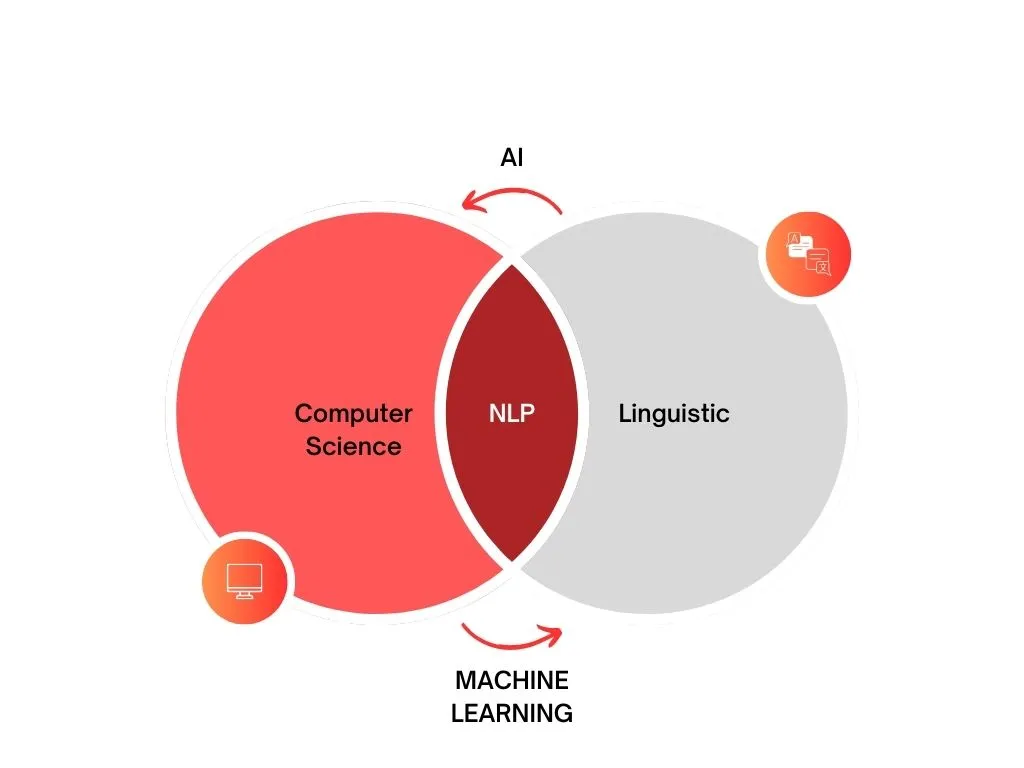
Natural language processing (Natural Language Processing, NLP) and large language models (Large Language Models, LLMs) are important technologies in artificial intelligence. NLP is a branch of AI concerned with analyzing, understanding, and processing human language using computers.
LLMs, in turn, are advanced machine learning models trained on very large volumes of text data that can generate coherent and meaningful text. One of today’s best-known large language models is ChatGPT from OpenAI.
NLP and LLM applications in public procurement
NLP and LLM technologies are used across areas such as automatic text classification, information extraction, machine translation, and text generation. In healthcare, these technologies can analyze medical records and identify patterns that support disease prediction.
In finance, they can analyze financial reports and support forecasts of market trends. In the legal sector, NLP and LLM technologies can analyze legal documents and efficiently extract relevant information.
In public procurement, these technologies offer opportunities to automate and streamline processes such as data categorization and analysis. By using NLP and LLMs, governments can cluster and analyze procurement data more efficiently, supporting better decision-making and resource allocation. Practical applications of NLP in public procurement include:
- Extracting relevant information, identifying key terms, and understanding context can help automate project review and evaluation.
- Analyzing supplier information, including qualifications, past performance, and references, can help automate supplier capability assessment and comparison of supplier proposals.
- Analyzing public procurement contracts and extracting important provisions, terms, and conditions can support contract management and monitoring of contract performance.
- Analyzing large volumes of data such as financial reports and public records can help identify issues and improve assessment of supplier integrity and financial stability.
- Advanced search capabilities can make it easier to find relevant information and develop recommendation systems based on historical data and user preferences that suggest suitable suppliers, contract clauses, or procurement strategies.
Aspecta’s NLP solution: making procurement more efficient
Aspecta’s solution uses NLP to categorize, group, and analyze public procurement data more efficiently. By using NLP, the solution can automate and streamline multiple parts of the procurement process, including data categorization, supplier evaluation, contract analysis, and risk assessment.
By reducing the time spent on these tasks and minimizing errors, the solution allows public authorities and suppliers to work many times more efficiently and effectively.
The joint project between Aspecta and KInIT demonstrates how modern technologies and innovation can bring significant benefits to different processes. The project provides an example of applying theoretical advances in practice and highlights the opportunities created by artificial intelligence and innovation in public procurement.
Conclusion
Aspecta is driven by innovation and digital transformation. Implementing NLP technologies in public procurement and applying our AI experience reflects our commitment to remaining at the forefront of technological progress and using it to deliver tangible results for clients and society.
Using AI and NLP, we aim to optimize public procurement processes, reduce costs, and improve service delivery.
The collaboration between Aspecta and KInIT brings a breakthrough solution to public procurement. By applying Natural Language Processing (NLP) and Large Language Models (LLMs), governments can revolutionize how public procurement data is categorized, analyzed, and used.