
See what skills your team has and where the gaps are
Competency mapping that shows who's on your team, what they can do, and where the gaps are, so you can assign people based on actual skills rather than impressions.
Leaders in automotive, banking, and telecommunications rely on our solutions








A skills spreadsheet goes out of date before you finish it
In a fast-moving technology environment, traditional HR practices are not enough. Companies struggle to balance hiring new people with developing the ones they already have, and managers often have no clear picture of what their team can actually do.
The consequence is always similar: people are assigned to services they are not qualified for, quality drops, and key specialists leave because they cannot see where to grow.
We address this with Talendly, which supports continuous competency mapping and development with AI, rather than mapping them once a year in a spreadsheet.
From visibility to a clear decision
You map competencies
Technical skills, soft skills, and potential for further growth, all measured transparently on a consistent scale across departments.
You see the gaps
A gap analysis shows which skills the team lacks to handle a particular service or project.
You assign people based on skills
No more mismatch between who is assigned to a service and who is qualified for it.
You build development plans
Personalized plans and clear career paths instead of blanket training that does not address individual needs.
You define the profile you need
The system identifies the missing skills, so requirements for new roles are based on real gaps rather than guesswork.
The same three steps we used at Volkswagen
The approach is not theoretical. This is how we mapped competencies for a real service at VWGS.
PHASE 01 / 03We define what the service requires
For a specific service, we identify the required skills, including the requirements for L2 and L3 support.
We build individual profiles
Each team member gets a profile using a consistent scale, with a description for every skill level, so the assessment stays consistent.
We run screening and gap analysis
We go through the whole team, identify suitable candidates, and show which gaps still need to be closed.
Results in practice
A clear view of the team
Managers can see the team's skills and capacity, so planning becomes strategic rather than project by project.
Better service quality
The risk of a mismatch between people's skills and service requirements is reduced.
Lower attrition
Clear career paths and visible development opportunities help retain key specialists.
Better targeted training
Personalized plans instead of blanket training, and faster uptake of new technology.
Better hiring
Requirements for new roles are based on actual skill gaps in the team.
Connected to your HR processes
API integration with your existing HR and project systems, rather than another silo.
Proven in practice
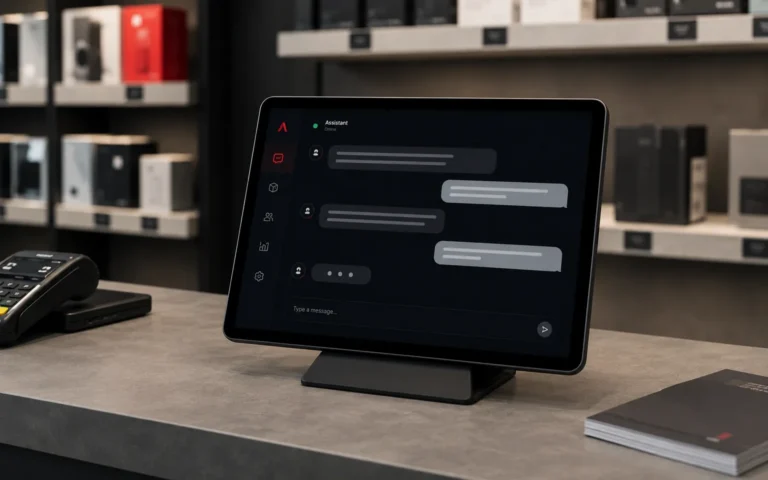
Farby.sk: AI assistant for customer advice in e-commerce
1,000 questions per month
handled by the AI assistantStrakovo: AI garden advisor that recommends only from its own product range
2,500 questions per month
handled by the AI assistant
How Aspecta’s NLP solution is changing public procurement
Public procurement faces significant process and time inefficiencies. Multilabel classification algorithms, semantic similarity analysis, and large language models can deliver revolutionary improvements…
View case studyQuestions we hear most often
Will people object to being assessed?
Some people are wary at first, which is normal. We address this through open communication about what the system is for: not monitoring people, but helping them see where they can grow. That is exactly how it worked at VWGS.
How do you keep the assessment consistent across departments?
Every skill level has a detailed description, and managers are trained in how to use them. Without that, each department would assess people differently and the results would not be comparable.
Do we have to change our existing HR systems?
No. The solution connects through APIs to your existing HR and project systems, so data can flow between them automatically.
Who keeps the profiles up to date?
This is usually the biggest practical challenge. We address it with automatic reminders and with features that encourage people to keep their profiles up to date, so it does not become a once-a-year obligation.
See what your team can actually do
In a short call, we'll discuss what competency mapping would look like in your organization. No obligation.