
Connect your systems and let processes run automatically
We connect your systems and automate the steps your teams handle manually today. Where judgment is needed, AI helps.
Leaders in automotive, banking, and telecommunications rely on our solutions









When systems do not work together
Orders in one system, quotes in another, production in a third. The more tools a company uses, the more data is re-entered by hand and the more errors occur as data moves between them. Processes stall at the boundaries between departments.
Integration connects those systems so they exchange data automatically. Automation takes over the repetitive steps in between. AI handles tasks that once required human judgment: extracting data from documents, classifying requests, and recommending the next step.
Four layers of one solution
From system integration to software robots and AI. We combine them according to what your process needs.
System integration
We connect ERP, CRM, e-commerce, and production systems through APIs, so data flows without being re-entered.
Process automation
Repetitive steps such as order processing, invoicing, and reporting are handled automatically according to rules you define.
AI in your processes
AI handles tasks that rules alone cannot: it reads documents, classifies requests, and proposes a decision.
Software robots
For tasks with clear rules we deploy robots that work inside your existing systems without changing them.
Benefits of system integration
Data without re-entry
Information moves automatically between systems, accurately and on time.
Faster processes
Process steps continue without waiting for manual intervention, from order to invoice.
Fewer errors
Eliminating manual re-entry reduces data-entry errors and complaints.
A better customer experience
Faster answers and consistent service, because the data is where people need it.
Visibility into processes
Connected systems provide a single view of where each item stands and where a process has stalled.
Cost savings
Time savings and fewer corrections translate directly into lower costs.
From mapping to operations
We start with the process that holds you back most, then choose the right technology.
PHASE 01 / 04Mapping the systems and processes
We establish which systems you use, where data is re-entered by hand, and where the process stalls.
Designing the connections
We design the integrations, the automated steps, and the steps where AI or software robots can help.
Deployment in stages
We implement integrations in stages so operations keep running. We verify each step before adding the next.
Operations and further development
We monitor, maintain, and extend the integrations where they deliver the most value.
Proven in practice

Implementing the P-Dashboard application
P-Dashboard gives Volkswagen AG a single view of performance indicators across its plants and central offices. Management can compare results between locations,…
View case study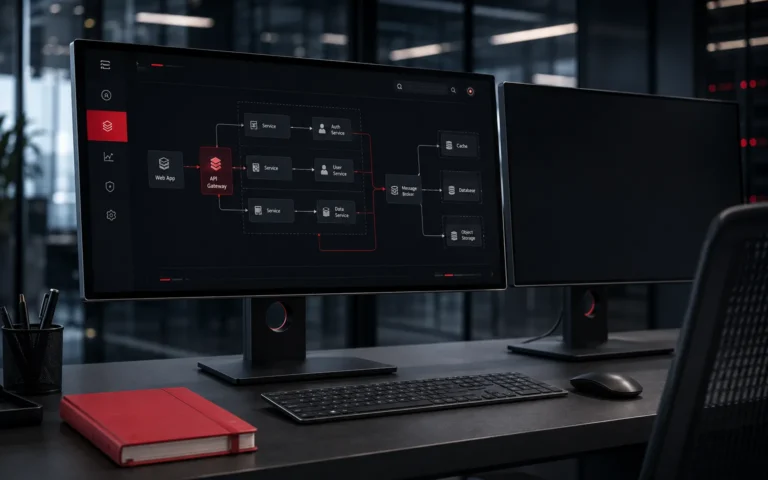
Microservices architecture for PSS
For Prvá stavebná sporiteľňa, we implemented a microservices-based architecture that supported its move to a new infrastructure platform. We used the Spring…
View case study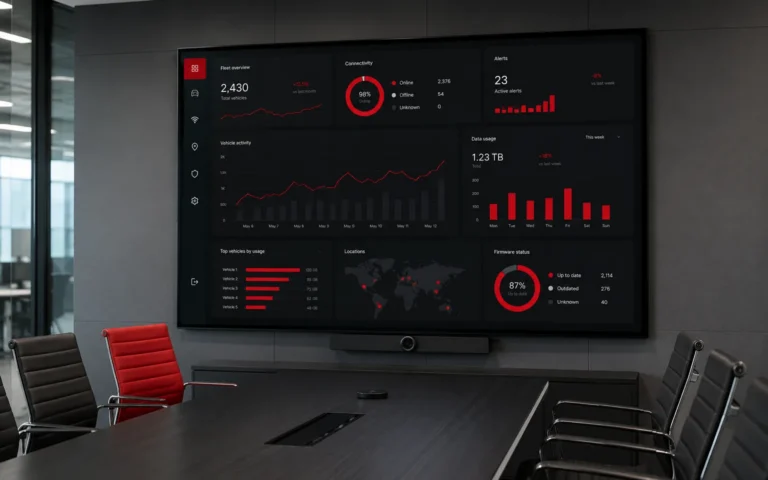
Implementing the Business Cockpit system
Implementing Volkswagen's Business Cockpit provided an effective tool for enterprise performance management. Inspired by the Balanced Scorecard methodology, the system supports strategy…
View case studyQuestions we hear most often
What is the difference between automation and integration?
Integration connects systems so they exchange data automatically. Automation takes over the repetitive steps in between. In practice the two go together, which is why we handle them together.
Do we have to replace our current systems?
No. We connect what you already use, through APIs and proven integration practices.
Where does AI come in?
Where rules are not enough: reading documents, sorting requests, proposing the next step. For tasks with clear rules, robots are enough.
How long does an integration take?
The first connection is usually ready within weeks. We deploy in stages, so you see the benefit as you go.
What if one of the systems changes?
The integrations run on standard interfaces and we monitor them, so we catch the change and adapt the solution.
Which of your processes stalls most often?
In a short call with an expert we will go through it and recommend how to integrate and automate it.