
Client
The client is a global automotive manufacturer that monitors production performance, time losses, and both planned and unplanned production line stops. Its manufacturing operations are managed at the level of production halls, lines, and shifts.
Production team leaders, production management, and maintenance personnel use line stop data. The client’s internal IT team is also involved in managing and operating the solution.
Background: Line stops were recorded, but their causes were tracked manually
The client’s production equipment was connected to a system that recorded line stops. However, a record of a stop alone could not explain why production had stopped. Team leaders had to assign causes to individual stop events so that the main sources of production time losses could be identified and corrective actions determined.
The client therefore needed a consistent way to record the causes of line stops and track their impact on production more accurately. It was also important to make current and historical data available to the people responsible for managing production.
The first step was a set of prototypes in Google Sheets, which Aspecta developed for the client. The spreadsheets supported hourly records, historical tracking, reporting, and visualization of the OPR production metric. OPR measures the percentage of a line’s production plan achieved, comparing the number of units produced with the number the line was expected to produce within the available time.
The client needed to move to a standalone application that could support regular use by multiple users and further functional development.
In 2022, an additional requirement emerged: preparing the application for use across multiple manufacturing plants. Each plant needed its own settings and recording rules. The client also required the application to be migrated to its cloud environment, with its internal IT team gradually taking over operations.
Solution: One application for recording and analyzing line stops
Building on the experience gained from the prototypes, Aspecta developed a standalone application to replace the original Google Sheets records. It retained the necessary production monitoring functions and added manufacturing structure management, continuous analysis of line stops, and real-time collaboration among multiple users.
From recording a line stop to analyzing its impact
The application uses the client’s manufacturing structure, which defines production halls, lines, stations, and shifts.
Line stop times reach the application in two ways: they are either entered manually by the line operator or retrieved automatically from the line PLC through the plant data lake.
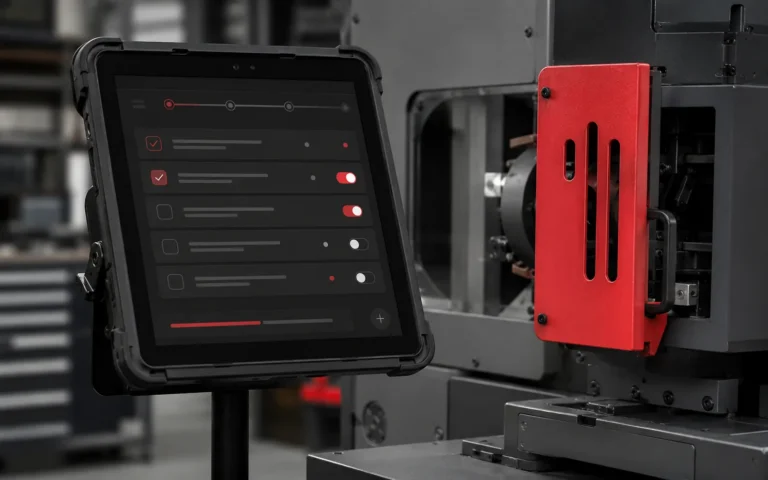
The team leader sees line stops and interruptions in the event list for the relevant line and shift. They assign a cause category to each record and add a note if needed. These categorized records can then be analyzed according to consistent rules.
The application provides several functions for day-to-day data management:
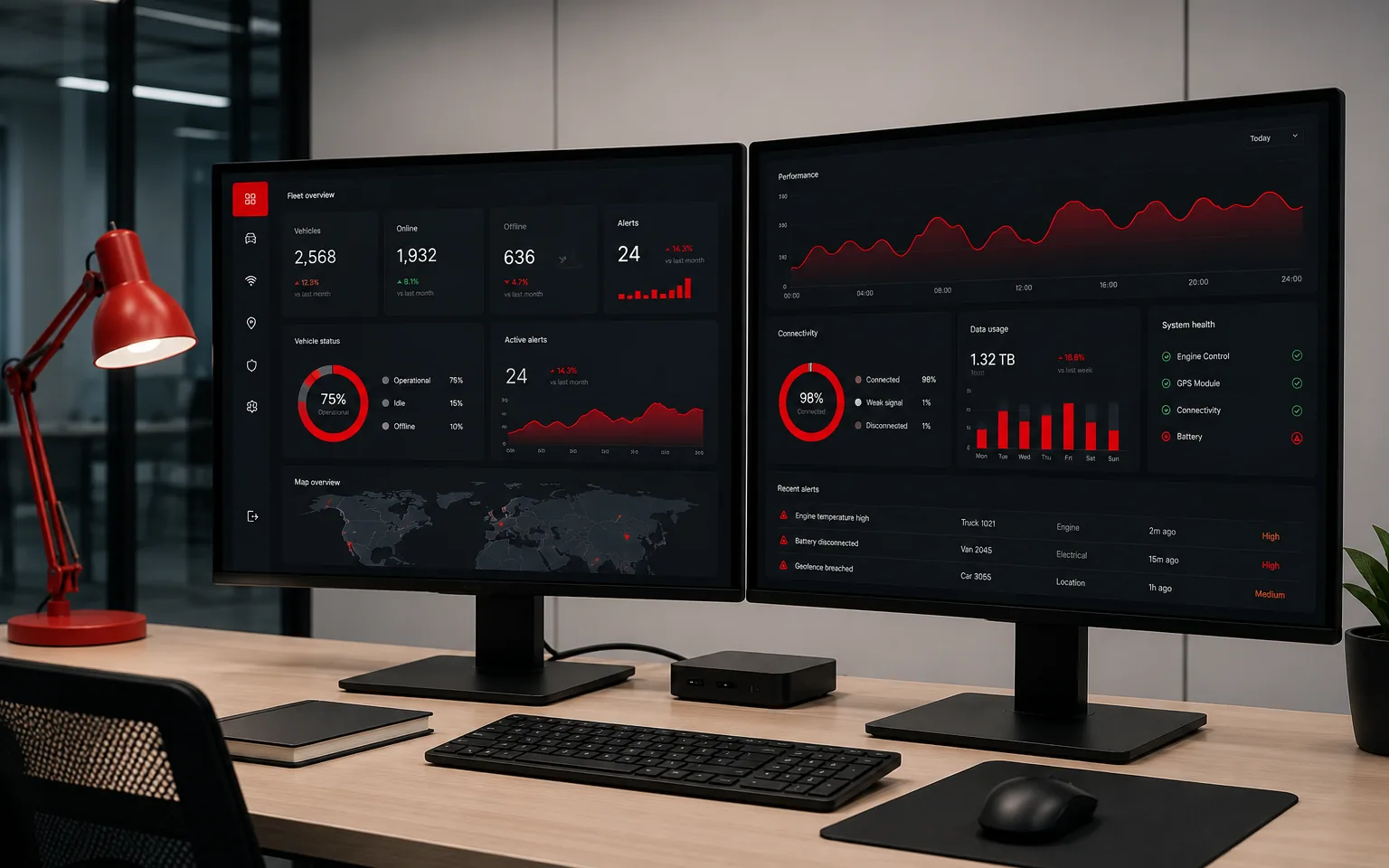
- Current production overview: displays line stop data and actual production figures to multiple users simultaneously.
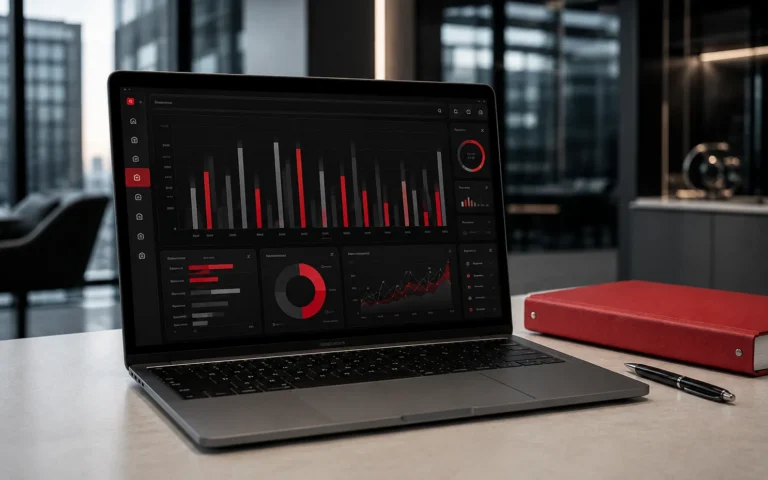
- Performance analysis: calculates OPR by hour and shift and displays the results in charts.
- History and analysis: allows users to review previous shifts, compare trends, and export data to Excel.
- Record monitoring: highlights unprocessed line stop records and maintains a history of changes.
The solution also included migrating data from the original spreadsheets so that users could continue working with previously recorded information.
Expansion to multiple manufacturing plants
The original application was designed for a single plant. To support multiple locations, Aspecta modified the solution’s architecture so that several plants could be managed within one application without requiring separate code changes for each plant.
A plant level was added to the system’s structure above individual production halls. Users can access one or more plants depending on their roles.
The following can be configured separately for each plant:
- line stop cause categories,
- user roles and access permissions,
- language, time zone, and date format.
Preserving the accuracy of historical data was an important part of the expansion. The application tracks when individual settings took effect, ensuring that subsequent changes do not affect the interpretation of older records. Changes to historical data are also possible only for a limited time.
Preparing to run in the client’s own cloud
The expansion also included preparing the application to run in Google Cloud, which the client uses. The previous version ran in Microsoft Azure.
The operational setup was designed so that the client’s internal IT team could gradually take responsibility for the application.
Technical details
| Layer | Technology | Purpose |
|---|---|---|
| Application | .NET (server), Angular (client) | Line stop recording, OPR calculation, reporting |
| Data | Microsoft SQL Server, Redis, SignalR | Production and line stop data, immediate display of changes to multiple users |
| Authentication | Keycloak | User authentication and access permissions |
| Infrastructure | Google Cloud, Kubernetes, Terraform, Helm | Preparing the application to run in the client’s cloud, infrastructure as code |
Implementation: From prototypes to trial operation
The project progressed through several stages, each responding to evolving requirements from the client’s manufacturing operations and IT department.
2019 to 2020: Prototypes and the first application
The collaboration began with the development of a recording solution in Google Sheets. In 2019, Aspecta also started working on a standalone application, with development continuing until the end of 2020.
From October 2019, the solution was continuously adapted to production needs. New features included charts showing OPR trends and line stop minutes, exports for maintenance teams, a team calendar, and multilingual support.
2022: Expansion to multiple plants
The main development phase of the new version took place from June to September 2022. Aspecta and the client’s team worked together in shared development cycles.
From 2023: Preparing for the client’s cloud and handover
In 2023, the application was being prepared to run in the client’s cloud environment. The handover to the internal IT team has been underway since July 2024.
Aspecta provides technical support and transfers the knowledge needed for ongoing application management.
Results: Consistent records and an expanded version in trial operation
The project changed how the client records and analyzes production line stops. The original spreadsheets were replaced by a standalone application that brings together production records, line stop causes, and performance reports.
The original version of the application was operational at one manufacturing plant in 2022. It enabled team leaders to process line stops for individual production lines while providing management with current and historical production data.
The expanded version for multiple plants underwent trial operation. Additional plants can be added through configuration, without plant-specific code changes.
Conclusion: Further development and regular operation
The project gradually evolved from recording line stops at a single plant to a multi-plant version that underwent trial operation. An important part of its development was adapting the application to different plant-specific rules and the client’s requirement to operate it in its own cloud environment.
The next step is moving the expanded version into regular operation.