

Client
The client is a manufacturing plant specializing in the production and remanufacturing of printer consumables. Production runs across multiple lines and shifts, covering various production series and product models.
Two teams oversee compliance with established procedures. Production employees perform regular daily checks, while the quality team conducts process audits.
Background: Manual checklist management complicated inspections and reporting
Inspection procedures at the plant vary depending on the production series, model, and type of line. Checks are performed several times a day on individual lines, making it important for employees to use up-to-date checklists and follow the prescribed procedures.
However, checklists were created and updated manually in Excel. There was no shared checkpoint database from which checklists for different lines and products could be assembled. Managing them therefore involved repetitive manual work and carried a risk of duplicates and errors.
Evaluating the results was similarly demanding. At the end of each week, the responsible employee reviewed recorded nonconformities and requested explanations from the relevant colleagues. For each nonconformity, they needed to identify the specific checkpoint, error message, and reason.
The client therefore needed a solution for centrally managing checklists, performing checks directly on the production floor, and continuously monitoring results. The requirements also included retaining records for two years.
Solution: One application for daily checks and process audits
Aspecta developed a solution on its own Solvedio platform, designed for fast, cost-effective, and flexible digitization of business processes, particularly in manufacturing.
Daily checks and process audits are managed within a single application. Employees use a shared checkpoint database, while checklists can be tailored to individual production series, models, and lines.
Checklist management without repetitive manual updates
The supervisor creates checklists by selecting checkpoints from the shared database. If a required checkpoint does not exist, the supervisor can add it and reuse it in other checklists.
When a checkpoint is modified, all checklists currently in use are updated. Checks already in progress and archived records remain unchanged, making it possible to verify which requirements applied when a check was performed.
Checks directly on the production line
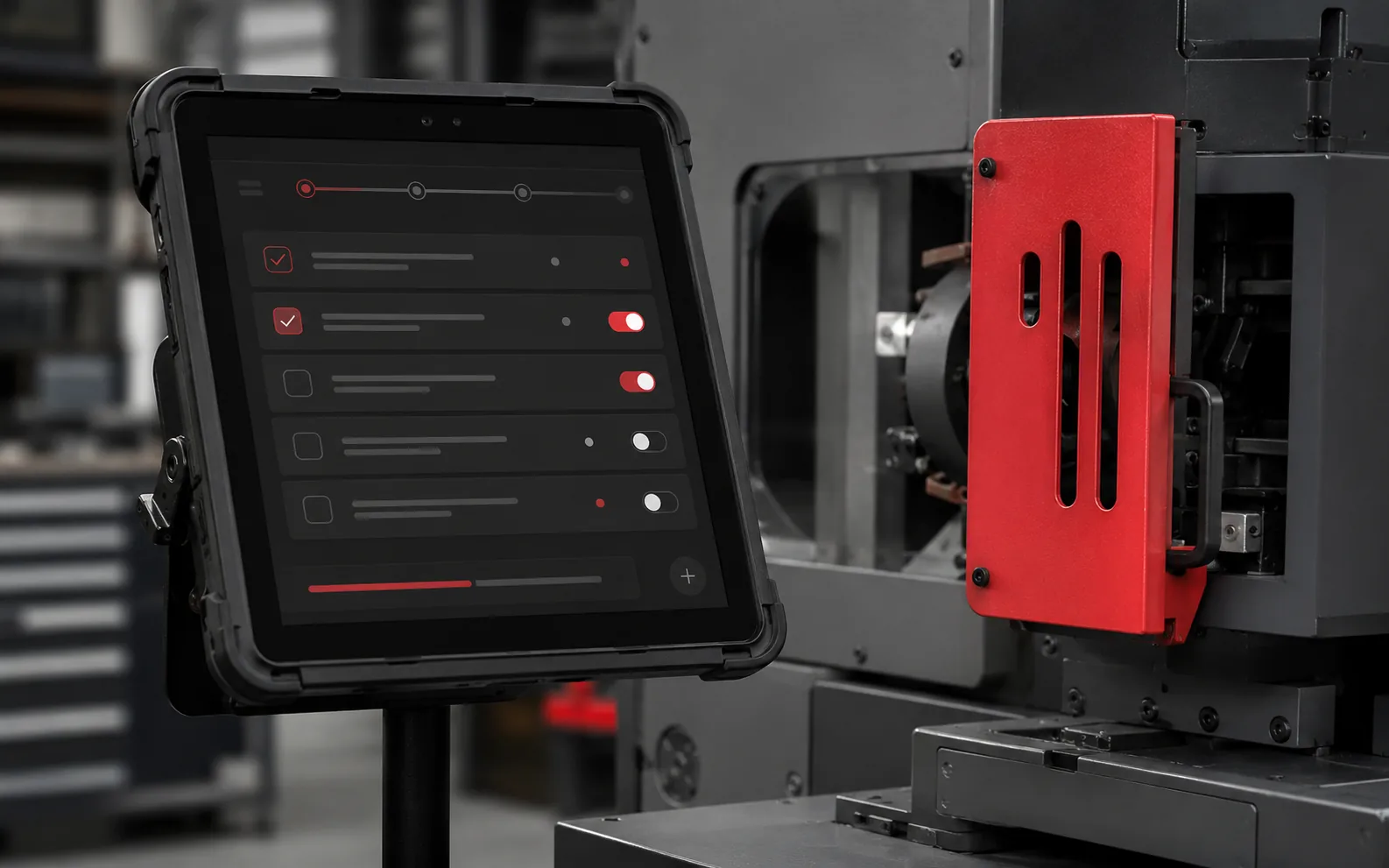
The auditor performs checks using a tablet or phone. After selecting the appropriate checklist, they work through the checkpoints in the prescribed order.
The system displays only one checkpoint at a time and prevents users from skipping steps. At each checkpoint, the auditor records an OK or NOK result.
If a nonconformity is identified, the auditor selects the corresponding error message and reason. In urgent cases, they can send a notification directly to the supervisor from within the check.
Automated notifications and reporting
The solution also monitors whether scheduled checks and audits have been completed on time. If a check is missing, the system notifies the supervisors.
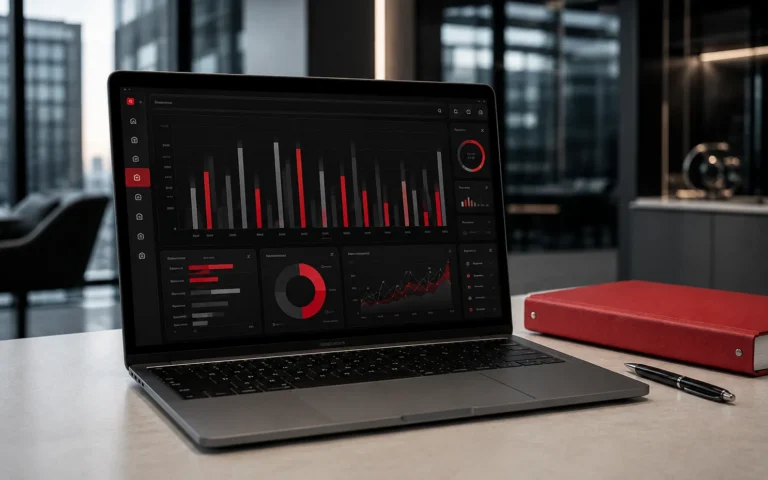
Results are available in dashboards for supervisors and administrators. They can monitor the number of completed checks and identified nonconformities by production series over a week, month, or fiscal year.
Every week, the system automatically sends a nonconformity report by email. It includes information about the production series, model, line, and checkpoint, along with the result, error message, and reason. The responsible employee receives the information needed for regular nonconformity reviews without having to compile a weekly list manually.
Technical details
Most of the solution was implemented through configuration of the Solvedio platform. Custom development was required only for an external function that automatically generates and sends the weekly report.
| Layer | Technology | Purpose |
|---|---|---|
| Application | Solvedio: Notifications, Workflow, Dashboard, Code lists, Lists | Checklist management, performing checks, recording nonconformities, and reporting |
| Devices | Tablet, phone | Performing checks directly on the production line |
| Reporting | AWS Lambda, Amazon API Gateway | Automated generation and delivery of weekly nonconformity reports |
Implementation
The project began in October 2024 with analysis workshops. Aspecta worked with the client to review existing inspection procedures, prepare a user story map, and gradually adapt the checklists to production and quality requirements.
Throughout the collaboration, the client provided lists of production series, models, lines, and auditors. Requirements were refined and necessary adjustments discussed during regular meetings.
Solution configuration began in December 2024, and the first version of the application was ready in January 2025. Additional production lines and series were added over the following months. The client has been using the application in full operation since September 2025, and automated weekly nonconformity reporting was added in fall 2025.
In 2026, the solution continued to expand to new production series and product models, alongside efforts to standardize checkpoints.
Results: Unified checks, accessible results, and audit history
The manufacturing plant now uses a single application for daily checks and process audits across 11 production lines. Checklists are built from a shared checkpoint database, eliminating the need to manage them separately in Excel.
The change is most visible in how checks are carried out and how results are handled:
- Consistent inspection procedures. Employees use up-to-date checklists and complete checkpoints one by one in the prescribed order.
- Preserved history. Inspection records are retained for two years, and subsequent changes to checkpoints do not alter data from completed audits.
- Audits without separate preparation. Answers to auditors’ questions are available in the system. According to a project estimate, employees can find and present the relevant information in 1 to 5 minutes, depending on the complexity of the question.
Conclusion
An important part of the project was enabling checks to adapt to changes in the plant’s product portfolio. New production series and models introduce additional checklist requirements, while the history of completed checks must remain intact.
The shared checkpoint database allows these changes to be managed within one application. The client can therefore gradually expand the scope of digitized checks without needing a separate solution for each new production series or line.