

Migrating Volkswagen AG’s Business Cockpit (BC) application to the AWS cloud improved performance and scalability and substantially reduced costs. BC, a key solution for managing targets across 17 manufacturing plants, now benefits from the flexibility and security of cloud infrastructure and is ready for further digital integration.
Key points:
- Substantially better scalability and flexibility of the IT infrastructure for future growth
- More than 80% lower infrastructure and licensing costs compared with on-premises infrastructure
- Continuous operation throughout the migration, with the emphasis on data integrity
- Stronger security standards through encryption and PKI+PIN authentication
- The application is prepared for integration with other digital systems at Volkswagen AG
Migrating Volkswagen AG’s Business Cockpit (BC) application to the AWS cloud delivered significant cost savings, better performance, and greater scalability.
This centralized solution, used across 17 manufacturing plants, was moved from on-premises infrastructure to the AWS cloud platform in order to optimize operations and prepare the system for future integration into the wider Volkswagen digital ecosystem. The project shows how a cloud transformation can support flexibility, efficiency, and innovation in enterprise IT systems.
The client
Volkswagen AG, one of the world’s largest carmakers, set out to optimize the operation of its Business Cockpit (BC) application, which serves as a centralized IT solution in its manufacturing plants and central departments worldwide.
To improve the efficiency, scalability, and flexibility of its IT infrastructure, the company decided to migrate BC to the AWS cloud platform, laying the groundwork for further digital development and innovation.
Goals
The main goals of the migration were:
- Cost savings: reduce operating costs by moving to a scalable cloud infrastructure.
- Better performance: improve system response times to make operations more efficient.
- Scalability: make it easy to bring further VW brands and central departments onto the system.
- Data integration: connect to the digital production platform (DPP) using microservices and a data lake.
The solution: migration strategy
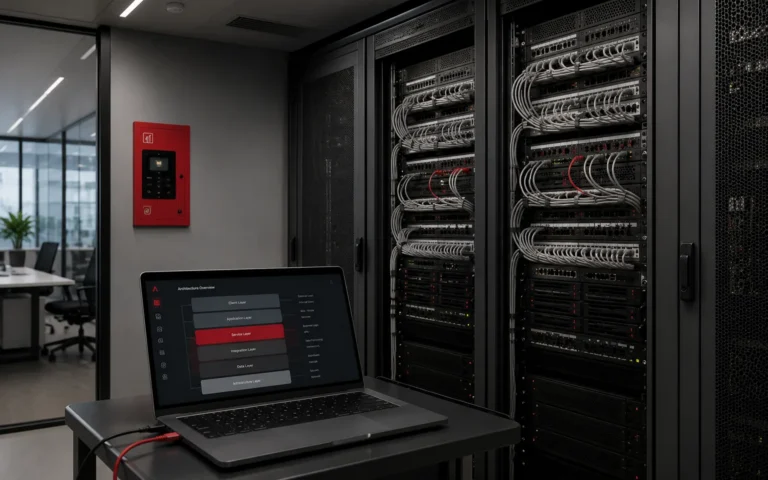
Technical architecture: the migration strategy used a lift and shift approach, moving the existing infrastructure into the AWS cloud with minimal changes to the application. The key components of the architecture were:
- AWS infrastructure: EC2 instances for the web servers, reporting servers, and daemon service servers.
- SQL Server database: SQL Server databases hosted on Amazon RDS for SQL Server.
- BIG-IP F5: authentication through BIG-IP F5 was retained.
The main phases of the migration:
- Planning and preparation:
- A detailed migration plan involving all stakeholders, including the DPP team and group IT.
- Preparation of the AWS environment and a configuration tailored to the BC application.
- Infrastructure setup:
- Configuration of EC2 instances and RDS to host the application and the database.
- Implementation of AWS services such as S3 for data storage and CloudWatch for monitoring.
- Data migration:
- Migration of existing production data from the on-premises infrastructure to AWS.
- Data integrity and service continuity secured throughout the move to the cloud.
- Testing and validation:
- Thorough testing in a pre-production environment to verify that the migration had succeeded.
- Smoke tests and performance benchmarking to confirm system stability and improved performance.
- Deployment:
- Final deployment into the production environment, with continuous support for post-migration stabilization.
Security and compliance:
- Strong authentication: user authentication through PKI+PIN was retained.
- Data encryption: all data in the AWS environment is encrypted using AWS KMS.
- GDPR compliance: strict adherence to GDPR requirements, particularly in the processing of personal data within the BC system.
Challenges and solutions
- Data integrity: keeping the data accurate and intact during the migration was one of the main challenges. It was addressed through thorough testing and validation phases.
- Security requirements: high security standards were maintained through encryption of data in transit and strong authentication methods.
Results and benefits delivered
- Cost efficiency: infrastructure and license costs were reduced by more than 80% by removing on-premises hardware and the associated maintenance costs.
- Better performance: faster system response times and greater reliability.
- Scalability: the new infrastructure allows new users and brands to be added quickly, giving flexibility for future development.
- Data integration: the migration created a solid foundation for future integration with Volkswagen IT systems.
Conclusion
Migrating the Business Cockpit application to the AWS cloud was a successful project that met its goals in cost savings, performance, and scalability. It also prepared BC for future integration into the wider Volkswagen digital ecosystem. This case study shows the approach and the benefits of migrating a business-critical application to the cloud, and can serve as a model for similar projects within the Volkswagen group and beyond.