
Key points:
- The AI system improves skills and team management at Aspecta.
- Automation and candidate success prediction support faster recruitment.
- Personalized learning supports employee development and satisfaction.
- AI supports resource optimization and more flexible task assignment.
- AI solutions allow faster responses to market opportunities.
Many companies increasingly rely on artificial intelligence solutions to automate recruitment, track skill development, and optimize project team formation. As demand for specialized expertise grows and talent becomes harder to find, AI systems help organizations respond faster to market changes, use their workforce more effectively, and strengthen competitiveness.
In this context, introducing advanced AI solutions is becoming an important step for many organizations seeking long-term growth and success.
Starting point and challenges
Aspecta currently faces several key challenges:
- Rapidly changing technology environment: The IT sector continues to evolve, requiring employees to update their skills continuously. Aspecta needs a system that can identify new trends quickly and adapt learning programs accordingly.
- Growing workforce: As the company expands, mapping and managing the skills of all employees becomes increasingly difficult. Traditional competency assessment and tracking methods are becoming more time-consuming and less precise.
- Diversification of services: A broader service portfolio requires a wider range of specialized skills. Aspecta needs better visibility into available competencies and the ability to identify skill gaps quickly.
- Competition for talent: Recruiting and retaining skilled IT professionals is becoming more difficult. The company needs more effective tools to identify potential candidates and create personalized development plans for existing employees.
- Need for accurate resource assignment: Building effective project teams is essential for project success and client satisfaction. Aspecta needs a system that can quickly and accurately identify the most suitable employees for specific projects.
Aspecta defined the following objectives for implementing AI in skills management:
- Make employee skill mapping and analysis more efficient.
- Improve the accuracy and speed of project team formation.
- Optimize employee learning and development programs.
- Improve the recruitment process for new talent.
The solution
Aspecta plans to implement a comprehensive AI system for skills management. The project is currently in the implementation phase and will include the following key components:
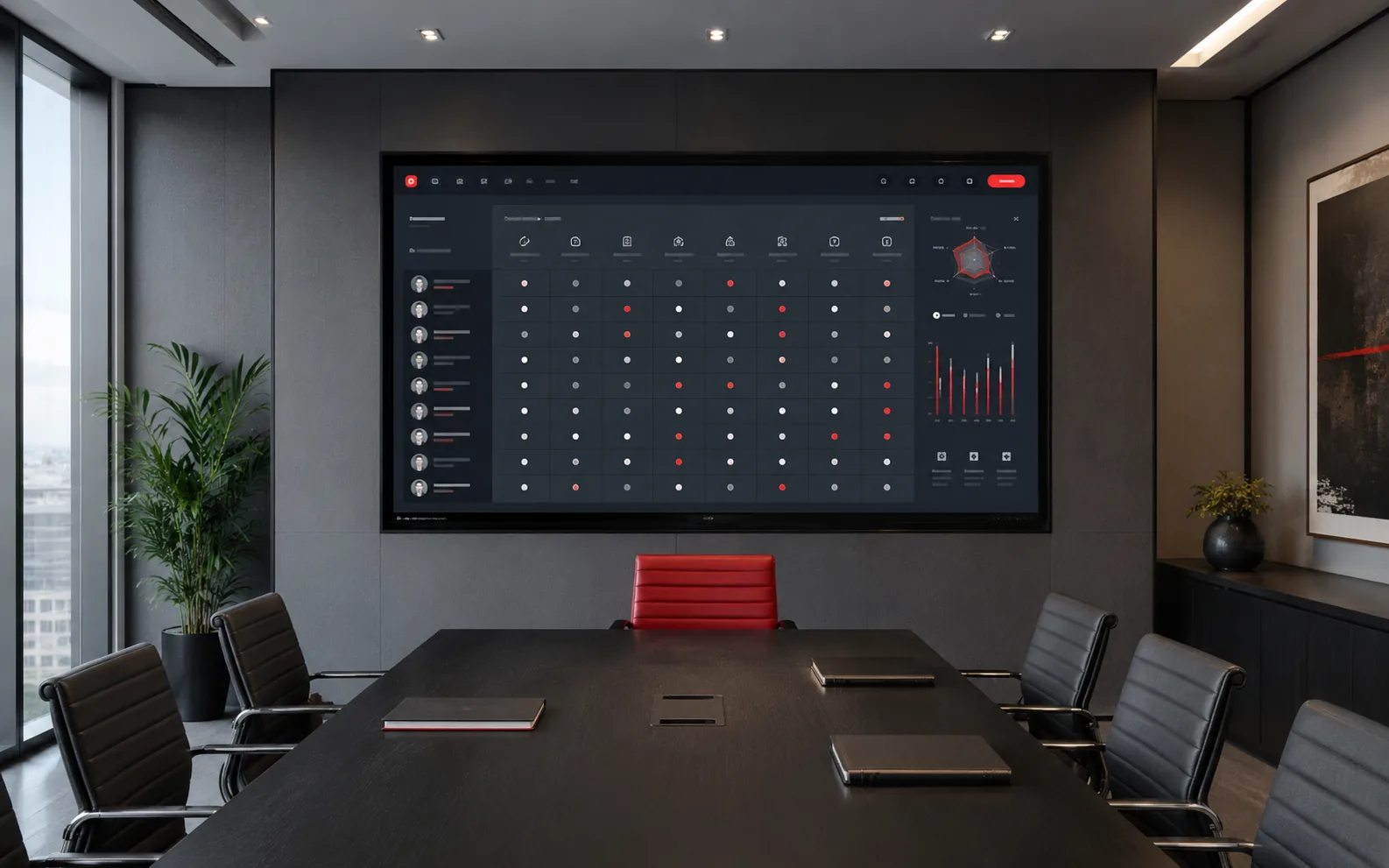
- Creation and updating of the Skill Matrix: The AI system will analyze existing job descriptions, technical documentation, project records, and other relevant information sources. Based on this analysis, it will automatically create and continuously update comprehensive skill matrices for different areas of the company. This will provide a current view of organizational skills with substantially less manual input.
The system will identify not only technical skills but also soft skills and project experience. It will also track how skills develop over time, helping management understand competency trends across the organization.
- Intelligent identification of candidates for projects: The system will analyze new project requirements and automatically identify the most suitable employees. It will consider technical skills, soft skills, previous experience with similar projects, and employee availability. This will help Aspecta build project teams more efficiently and make better use of available capabilities.
AI will be able to propose several team compositions while considering factors such as complementary skills, mentoring potential, and personality characteristics that influence team dynamics.
- Personalized development plans: Based on employees’ current skills, market requirements, and the company’s strategic goals, AI will propose individualized learning plans. These plans will consider both current company needs and expected future trends in the IT sector. The system will also recommend learning methods for each employee based on learning preferences and available time.
AI will continuously monitor employee progress and automatically adjust development plans based on results and changing organizational needs. The system will also identify potential career paths based on employees’ current skills and interests.
- Recruitment process optimization: AI will assist with defining criteria for new roles, analyzing candidate profiles, and recommending suitable applicants. The system will automatically scan résumés, compare them with role requirements, and predict a candidate’s potential success within the company. This can significantly shorten the time required to fill key positions and improve recruitment quality.
The system will also identify potential candidates for internal promotion or transfer, supporting internal talent development. AI will analyze technical skills, soft skills, and cultural fit, contributing to better alignment between new employees and Aspecta’s values and culture.
- Efficient assignment of employees to activities: The system will analyze employee availability and skills in real time, enabling dynamic task assignment and more efficient use of people across projects. This will improve the company’s flexibility when responding to changing project and client requirements.
AI will optimize task distribution to make better use of employee skills while also supporting development. The system will consider workload and employee preferences, contributing to a better balance between work and personal life.
Benefits and features of the AI skills management system
-
Automatic skill matrix creation: AI creates a skill matrix that maps company and team needs using data such as project assignments, technical documentation, résumés, and job descriptions.
-
Self-assessment for key competencies: For key competencies, AI creates a self-assessment to map the initial level quickly, followed by systematic assessment to address identified gaps.
-
Immediate identification of competency gaps: Gaps are identified immediately at both individual and team level.
-
Identification of talent and hidden capabilities: For a given performance requirement, AI helps identify people with the required skills and capabilities and surfaces abilities that may otherwise remain hidden within the team.
-
Assignment of responsibilities based on needs: AI identifies employees who are closest to meeting specific requirements and helps address mismatches between responsibilities and capabilities.
-
Support for growth and career development: Team members can see growth opportunities, future prospects, and how their development aligns with business needs.
-
Targeted employee development and recruitment: Management receives insights that support focused development and recruiting. AI identifies suitable candidates internally or on the market, helping reduce competency gaps.
-
Fair and efficient compensation: Compensation strategies can be more effective and equitable when supported by relevant data.


Benefits
Aspecta expects the AI skills management system to provide the following benefits:
- More efficient project team formation: The AI system will identify suitable employees for specific projects faster and more accurately. This should improve the use of talent, productivity, and the quality of delivered solutions.
- Shorter time to fill new positions: Automated analysis of candidate profiles and predictive modeling of potential success within the company will make recruitment faster and more efficient.
- Higher employee satisfaction with development opportunities: Personalized development plans and better-targeted learning opportunities should increase employee engagement and satisfaction with career growth at Aspecta.
- Higher overall company productivity: More effective use of employee skills, better project team formation, and targeted competency development should contribute to higher productivity overall.
- Faster response to new market opportunities: Better visibility into available skills and the ability to assemble suitable teams quickly should allow Aspecta to respond faster to new business opportunities.
- More effective learning programs: Personalized learning plans and accurate targeting of actual employee and organizational needs should improve the return on investment in learning.
Conclusion
Implementing an AI system for skills management represents an important step for Aspecta in digital transformation and HR process optimization. The project has the potential to improve how effectively the company uses and develops employee talent, responds to changing market requirements, and maintains its competitiveness in the dynamic IT sector.
Aspecta expects the advanced AI solution to contribute not only to better business outcomes but also to higher employee satisfaction and engagement.
Given the rapidly changing technology environment and increasing competition for talent, Aspecta considers the project important for maintaining its position in the Slovak IT services market. AI in skills management is not simply a technology upgrade but a strategic initiative with the potential to transform how the company develops and uses its most valuable resource: human capital.
The initiative also reflects Aspecta’s commitment to innovation and continuous improvement. By using the most advanced AI technologies in human resources management, Aspecta is not only optimizing internal processes but also demonstrating its ability to apply advanced technologies in practice.