

From RPA to intelligent automation
Software robots handle repetitive tasks with clear rules. AI can also handle documents and support decision-making. We implement automation that combines both.

Leaders in automotive, banking, and telecommunications rely on our solutions









Where RPA ends and AI begins
Software robots (RPA) take over repetitive tasks with clear rules: moving data between systems, processing invoices in a known format, filling in forms. They work reliably and without changing your systems.
RPA has limits: when a document arrives in a new format or a step requires judgment, the robot stops. That is why modern automation combines both approaches. Robots work where the rules are clear, and AI works where the content has to be understood. This is called intelligent automation, and in 2026 it is the standard.
RPA on its own vs. intelligent automation
- The robot stops when a document arrives in a new format.
- It automates only the steps with clear rules.
- Every change to a system means rewriting scripts.
- Every process is a separate robot.
- The business case is limited to simple tasks.
- AI can interpret documents and handle new formats.
- It can also handle steps that require judgment.
- Changes are handled by adjusting the configuration, not by rewriting.
- One platform manages both the robots and the AI.
- Intelligent automation can deliver value in more complex processes as well.
Benefits of automation
Less routine work for your teams
Software robots handle data re-entry, copying, and form-based tasks. People can focus on work that requires judgment.
Fewer errors
Data is transferred accurately on the first run and the thousandth.
Processed without delay
Requests, invoices, and reports are handled as they arrive, rather than waiting in a manual queue.
It handles documents too
With an AI layer, the automation handles documents and email as well, not only spreadsheets.
Handles peak demand
When seasonal volume rises, the automation scales to process higher volumes, with no hiring and no overtime.
Measurable return
We start with the process that offers the greatest savings and measure the impact continuously.
From mapping to operations
We start with the process where automation can deliver the greatest savings and expand based on the results.
PHASE 01 / 04Mapping the processes
We establish which tasks have clear rules and where the content has to be understood. We pick the processes with the greatest savings potential.
Designing the solution
We decide what a robot can handle and where AI steps in, including the connections to your systems.
Pilot and validation
We deploy the first process and measure both the time saved and the error rate.
Operations and expansion
We monitor and maintain the solution and add further processes based on measured results.
Proven in practice

Implementing the P-Dashboard application
P-Dashboard gives Volkswagen AG a single view of performance indicators across its plants and central offices. Management can compare results between locations,…
View case study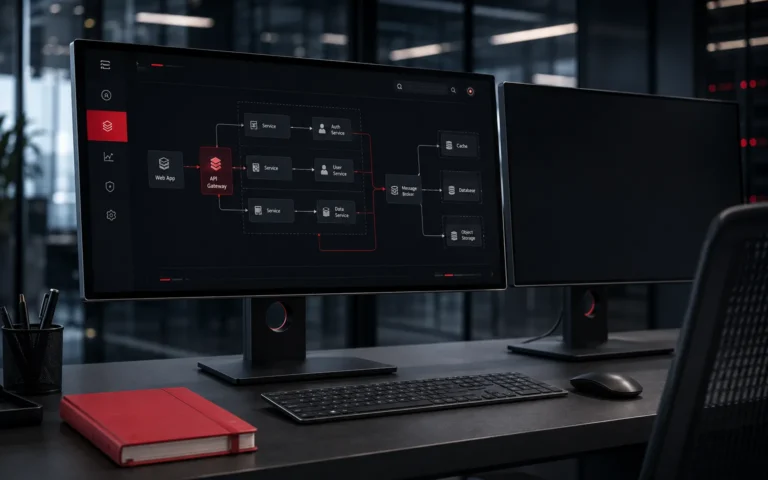
Microservices architecture for PSS
For Prvá stavebná sporiteľňa, we implemented a microservices-based architecture that supported its move to a new infrastructure platform. We used the Spring…
View case study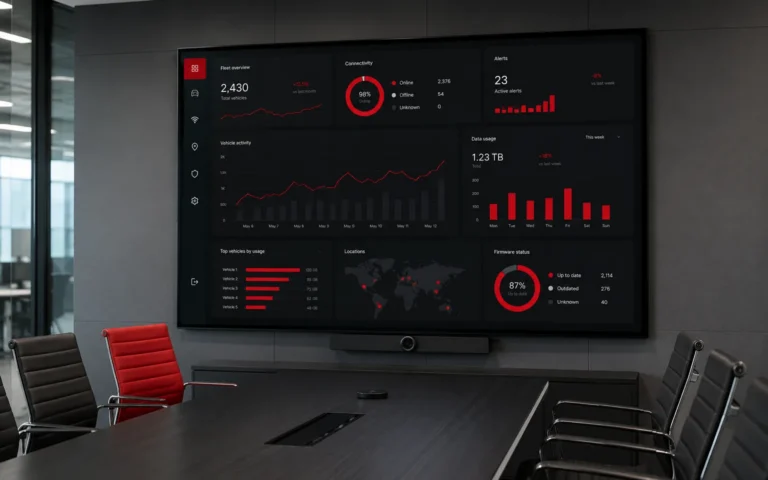
Implementing the Business Cockpit system
Implementing Volkswagen's Business Cockpit provided an effective tool for enterprise performance management. Inspired by the Balanced Scorecard methodology, the system supports strategy…
View case studyQuestions we hear most often
Is RPA still relevant in 2026?
For tasks with clear rules, yes, and the automation market keeps growing. RPA on its own, without AI, is no longer enough, which is why we combine the two.
Which processes are worth automating first?
Those with high volume, clear rules, and a lot of re-entry: invoices, orders, forms, and regular reports.
Do we have to change our systems?
No. The robots work through your existing interfaces and APIs, and the AI layer connects to what you already have.
What if the process changes?
We maintain the solution by adjusting the configuration. A changed process does not mean rewriting everything from scratch.
How do you measure the benefit?
With a pilot. Before expanding, we measure the time saved and the error rate on the first process.
Which routine costs you the most time?
In a short call with an expert we will find it and recommend whether RPA, AI, or a combination of both is the right fit.