

Analytická spoločnosť Gartner každý rok predstavuje technologické trendy v oblasti podnikania a na základe priorít rôznych organizácií a z nich vyplývajúcich technologických požiadaviek, ktoré smerujú až k CIO a IT lídrom. Tento rok Gartner uverejnil aj zoznam dvanástich digitálnych technológií, ktoré podľa analytikov budú pôsobiť ako multiplikátory digitálneho podnikania a inovácií v priebehu nasledujúcich troch až piatich rokov. Spoznajte trendy, ktoré v blízkom období ovplyvnia pravdepodobne aj váš biznis.
Čo je gartner?
„Gartner je lídrom v oblasti výskumu a poradenstva v sektore informačných technológií. Poskytuje podrobný prehľad o technológiách, ktorý je potrebný na prijímanie správnych rozhodnutí. Ich výskum, analýza a interpretácia IT biznisu v kontexte individuálnych úloh konkrétnych spoločností v mnohých smeroch ovplyvňuje smerovanie IT. Aj preto majú analýzy, štúdie a predikcie od analytikov z Gartneru v oblasti digitálneho podnikania veľkú váhu.“
Top technológie pre rok 2022
Okrem iného, Gartner každoročne identifikuje kľúčové technologické trendy pre podnikanie. V roku 2022 spoločnosť zaradila do rebríčka 12 strategických technológií, ktoré podľa nej budú výrazným spôsobom ovplyvňovať rast, digitalizáciu a efektivitu organizácií. David Groombridge, VP Analyst v Gartner v kontexte toho uvádza: „Generálni riaditelia vedia, že musia urýchliť osvojenie si digitálneho podnikania a hľadajú priamejšie digitálne cesty, ako sa spojiť so svojimi zákazníkmi.
Ale s ohľadom na budúce ekonomické riziká chcú byť efektívni a chrániť marže a peňažný tok.“ Tieto aspekty boli jedným z rozhodujúcich faktorov pri výbere nasledujúcich 12 technologických trendov, ktoré by ste v roku 2022 nemali v žiadnom prípade ignorovať.
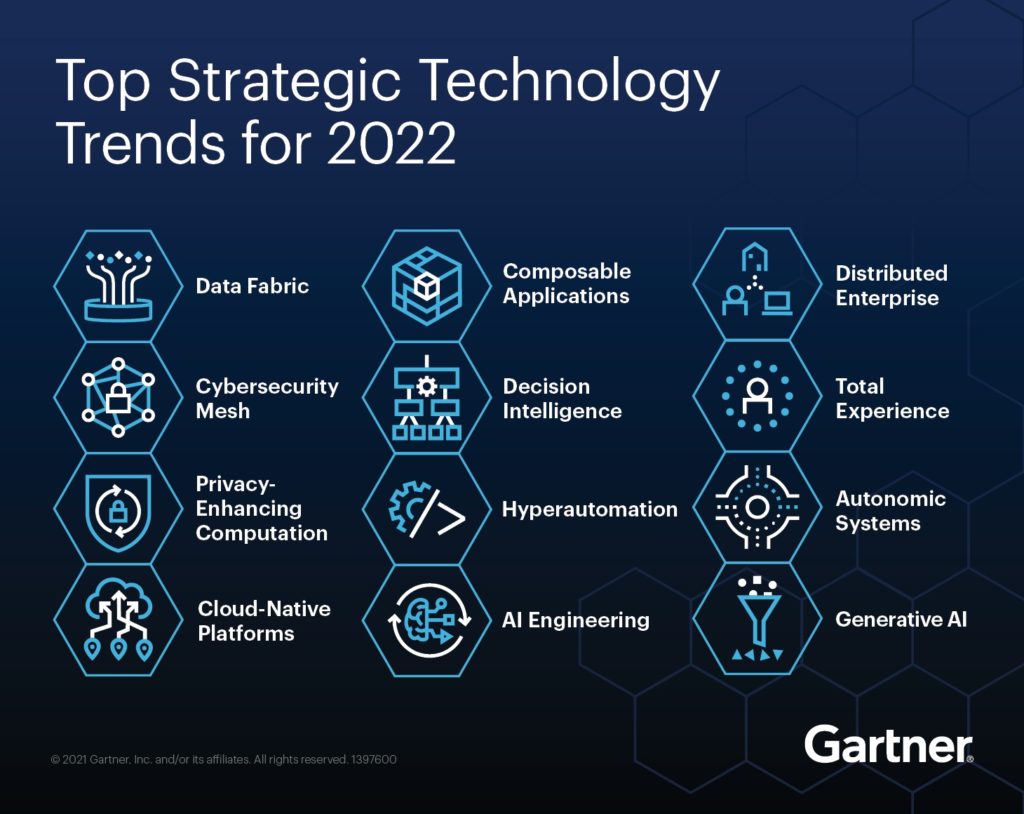
ZDROJ: www.gartner.com
TREND 1: DÁTOVÁ ŠTRUKTÚRA (Data Fabric)
Podľa IBM je dátová štruktúra alebo data fabric architektonický prístup na zjednodušenie prístupu k údajom v organizácii s cieľom uľahčiť samoobslužnú spotrebu údajov. Vďaka dátovej štruktúre podniky zvyšujú hodnotu svojich údajov poskytovaním správnych údajov v správnom čase bez ohľadu na to, kde sa nachádzajú. Dátová štruktúra môže používať analytiku na učenie sa a aktívne odporúčať, kde by sa mali údaje použiť a zmeniť. To môže znížiť úsilie pri správe údajov až o 70 %.
TREND 2: SIEŤ KYBERNETICKEJ BEZPEČNOST (Cybersecurity Mesh)
Cybersecurity Mesh alebo sieť kybernetickej bezpečnosti je flexibilná, skladateľná architektúra, ktorá integruje široko distribuované a rôznorodé bezpečnostné služby. Reprezentuje holistický prístup k bezpečnosti systému, kedy je každé zariadenie zabezpečené nezávisle vlastným perimetrom (ako sú brány firewall a nástroje na ochranu siete a podobne).
Prijatie tohto prístupu k IT bezpečnosti získalo na popularite s rozvojom práce na diaľku a cloudových riešení, ktoré rozmiestňujú zariadenia a počítače na rôzne miesta.
Trend 3: privacy-enchancing computation
Privacy-Enchancing Computation – PEC (voľne preložené ako výpočty zvyšujúce súkromie) – je spôsob, akým rôzne strany získavajú hodnotu z informácií bez toho, aby odhalili seba alebo iné súbory údajov. Spolupracujú na individuálnej úrovni pomocou použiteľných údajov bez zdieľania citlivých informácií medzi účastníkmi. „PEC“ zaisťuje spracovanie osobných údajov v nedôveryhodných prostrediach, čo je čoraz dôležitejšie z dôvodu vyvíjajúcich sa zákonov na ochranu súkromia a údajov, ako aj rastúcich obáv spotrebiteľov.
TREND 4: NATÍVNE CLOUDOVÉ PLATFORMY (Cloud-Native Platform)
Natívne cloudové platformy sú navrhnuté tak, aby boli odolné a využívali elasticitu, poriadok a flexibilitu cloudu. Sú vysoko agilné a umožňujú podnikom a spoločnostiam reagovať na rýchle digitálne zmeny, zefektívňujú náklady a vytvárajú ziskové operácie.
Podľa oficiálnej definície Cloud Native Computing Foundation umožňuje tento prístup organizáciám vytvárať a prevádzkovať škálovateľné aplikácie v moderných, dynamických prostrediach, ako sú verejné, súkromné a hybridné cloudy. Príkladom tohto prístupu sú kontajnery, servisné siete, mikroslužby, nemenná infraštruktúra a deklaratívne API.
TREND 5: SKLADATEĽNÉ APLIKÁCIE (Composable Applications)
Composable Applications sú konceptom, v ktorom možno funkčnú časť aplikácie oddeliť od celej aplikácie, aby sa vytvorila lepšia aplikácia s väčšou funkčnosťou. „Skladateľné aplikácie“ sú teda postavené z modulárnych komponentov, uľahčujú používanie a opätovné použitie kódu, čím sa zrýchľuje čas uvedenia nových softvérových riešení na trh a uvoľňuje sa podniková hodnota.
TREND 6: ROZHODOVACIA INTELIGENCIA (Decision Intelligence)
Rozhodovacia inteligencia je praktický prístup na zlepšenie organizačného rozhodovania. Modeluje každé rozhodnutie ako súbor procesov, pričom využíva inteligenciu a analytiku na informovanie, poučenie a spresnenie rozhodnutí. Rozhodovacia inteligencia môže podporovať a zlepšovať ľudské rozhodovanie, prípadne ho automatizovať pomocou rozšírenej analýzy, simulácií a AI.
TREND 7: HYPERAUTOMATIZÁCIA (Hyperautomation)
Podľa Automation Anywhere je hyperautomatizácia infraštruktúra pokročilých technológií, ktoré sa používajú na škálovanie možností automatizácie v organizácii. Ďalej automatizuje už automatizované procesy, pričom podnikové operácie posúva nad rámec individuálnych vstupov. Ide o rozšírenie staršej automatizácie obchodných procesov za hranice jednotlivých procesov.
Spojením nástrojov AI s RPA umožňuje hyperautomatizácia automatizáciu prakticky akejkoľvek opakujúcej sa úlohy vykonávanej podnikovými používateľmi. Hyperautomatizácia umožňuje škálovateľnosť, vzdialené ovládanie a narušenie obchodného modelu.
TREND 8: INŽINIERSTVO UMELEJ INTELIGENCIE (AI Engineering)
AI Inžinierstvo je vznikajúca disciplína zameraná na vývoj nástrojov, systémov a procesov, ktoré umožňujú aplikáciu umelej inteligencie v reálnych kontextoch – automatizuje aktualizácie údajov, modelov a aplikácií s cieľom zefektívniť poskytovanie umelej inteligencie. Jedným z cieľov tohto typu inžinierstva je to, aby sa zabezpečila trvalá obchodná hodnota umelej inteligencie.
TREND 9: DISTRIBUOVANÉ PODNIKY (Distributed Enterprises)
Distribuované podniky sú spoločnosti, ktoré si osvojili hybridný prístup k práci, majú interné aj vzdialené tímy, tieto tímy sa nenachádzajú na rovnakom mieste a kancelárie sú roztrúsené po rôznych mestách. Distribuované podniky odzrkadľujú obchodný model založený na digitálnych prvkoch a práci na diaľku.
Lepšie slúžia potrebám vzdialených zamestnancov a spotrebiteľov, ktorí podporujú dopyt po virtuálnych službách a hybridných pracoviskách. Čoraz častejšie sa objavujú názory, že práve tento typ podniku je ideálnym spôsobom podnikania v postpandemickej spoločnosti.
TREND 10: CELKOVÁ SKÚSENOSŤ (Total Experience)
Celková skúsenosť – total experience (TX) je stratégia, ktorá vytvára vynikajúce zdieľané skúsenosti prepojením disciplín používateľskej skúsenosti (UX), zákazníckej skúsenosti (CX), multi-skúsenosti (MX) a zamestnaneckej skúsenosti (EX). Ide o viac než len o zlepšenie skúseností jednej zložky – zlepšuje skúsenosti na priesečníku viacerých zložiek, aby sa dosiahol transformačný obchodný výsledok.
Tento prístup teda spája skúsenosti zamestnancov, zákaznícke skúsenosti, používateľské skúsenosti a viacnásobné skúsenosti naprieč viacerými kontaktnými bodmi s cieľom urýchliť rast. Vedie k väčšej dôvere zákazníkov aj zamestnancov, zvyšuje ich spokojnosť a lojalitu.
TREND 11: AUTONÓMNE SYSTÉMY (Autonomic Systems)
Autonómne systémy sú samostatne riadené fyzické alebo softvérové systémy, so samoriadiacimi charakteristikami, ktoré sa prispôsobujú nepredvídateľným zmenám a učia sa zo svojho prostredia – dynamicky upravujú svoje vlastné algoritmy v reálnom čase, aby optimalizovali svoje správanie v zložitých ekosystémoch. Autonómne systémy vytvárajú agilný súbor technologických schopností, ktoré sú schopné podporovať nové požiadavky a situácie, optimalizovať výkon a brániť sa útokom bez ľudského zásahu.
TREND 12: GENERATÍVNA UMELÁ INTELIGENCIA (Generative AI)
Generatívna AI je technológia na vytváranie nového obsahu využitím existujúceho textu, zvukových súborov alebo obrázkov. Pomocou generatívnej AI počítače detegujú základný vzor súvisiaci so vstupom a vytvárajú podobný obsah. Generatívna AI sa učí o artefaktoch z údajov a vytvára inovatívne nové výtvory, ktoré sú podobné originálu, ale neopakujú ho.
Tento typ umelej inteligencie má potenciál vytvárať nové formy kreatívneho obsahu a zrýchľovať cykly výskumu a vývoja v oblastiach od medicíny až po tvorbu produktov.
Je evidentné, že uvedené technológie zohrajú v postcovidovej dobe v oblasti digitálneho podnikania veľkú úlohu – urýchlia digitálne schopnosti a zvýšia rast riešením bežných obchodných výziev pre riaditeľov IT a technologických manažérov. Moderné technológie sa vplyvom pandémie a s ňou spojených zmien stali priam nevyhnutnou súčasťou úspešných podnikov, či už je to cloud computing, umelá inteligencia, automatizácia, RPA alebo BI.
Digitálne trendy, ktoré určil v roku 2022 Gartner ako strategické, posúvajú ešte viac hranice ich využitia a sú dôkazom toho, že vývoj v tomto smere, ktorý naštartovala práve pandémia, je rýchly a nezastaviteľný. Aj preto včasná a efektívna implementácia týchto strategických trendov dokáže odlíšiť vašu organizáciu od konkurencie a posilniť plnenie obchodných cieľov.
Niektoré z týchto inovácií predstavujú podporné technické schopnosti nevyhnutné pre konkurencieschopnosť v digitálnom svete, zatiaľ čo iné poskytujú schopnosti orientované na podnikanie, aby ste boli krok pred konkurenciou.
Každá z dvanástich technológií prináša podľa spoločnosti Gartner jeden z troch hlavných výsledkov:
- Digitálna dôvera: Technológie vytvárajú odolnejšiu a efektívnejšiu IT základňu tým, že zaisťujú integráciu a bezpečnejšie spracovanie údajov v cloudových a necloudových prostrediach, aby sa zabezpečilo nákladovo efektívne škálovanie IT základne.
- Vytváranie zmien: Uvoľnením kreatívnych riešení nových technológií môžete rozšíriť a urýchliť digitalizáciu vašej organizácie. Tieto technologické trendy vám umožňujú reagovať na zvyšujúce sa tempo zmien rýchlejším vytváraním aplikácií na automatizáciu obchodných aktivít, optimalizáciu umelej inteligencie (AI) a umožňujú rýchlejšie inteligentnejšie rozhodnutia.
- Urýchlenie rastu: Využitím strategických technologických trendov uvoľníte multiplikátory IT sily, ktoré znásobia obchod a podiel na trhu. Spoločne vám tieto trendy umožňujú maximalizovať vytváranie hodnôt a zlepšovať digitálne možnosti.
Dnes sa ešte bavíme o trendoch, ale vzhľadom na rýchlosť rozvoja digitálnych technológií a inovácií je pravdepodobné, že mnohé z týchto 12 trendov sa v blízkej budúcnosti stanú nevyhnutnou súčasťou úspešnej digitálnej transformácie. Ich implementácia, respektíve jej plánovanie, si vyžaduje holistický prístup vašej spoločnosti k modernizácii IT a digitálnej transformácii.
Spoločnosť Aspecta má v tomto smere relevantné skúsenosti a vie zabezpečiť, aby prijímanie inovácií vo vašom podnikaní prebiehalo hladko, konzistentne a s požadovaným výsledkom. Neváhajte nás osloviť a s našou pomocou si osvojiť technologické trendy, ktoré budú v najbližších rokoch akcelerátorom podnikania a biznisu.